
You’re scrolling through a Pakistani restaurant menu. Two dishes catch your eye: Chicken Karahi and Chicken Handi. Both are chicken. Both are in a curry. Both sound amazing. So which one do you order?
If you’ve ever stood at the counter (or stared at a delivery app) trying to decide, you’re not alone. These two dishes get mixed up constantly, even by people who grew up eating them. The confusion makes sense: they share ingredients, they come from the same food culture, and they’re often served side by side on the same table.
Here’s the good news: once you know what to look for, telling them apart is easy. At Charsi Karahi & BBQ menu, we’ve been serving both dishes fresh for years, made the traditional way. So let’s break down exactly what separates Chicken Handi from Chicken Karahi.
Quick Answer: Chicken Handi vs Chicken Karahi
Here’s the short version, if you’re in a hurry:
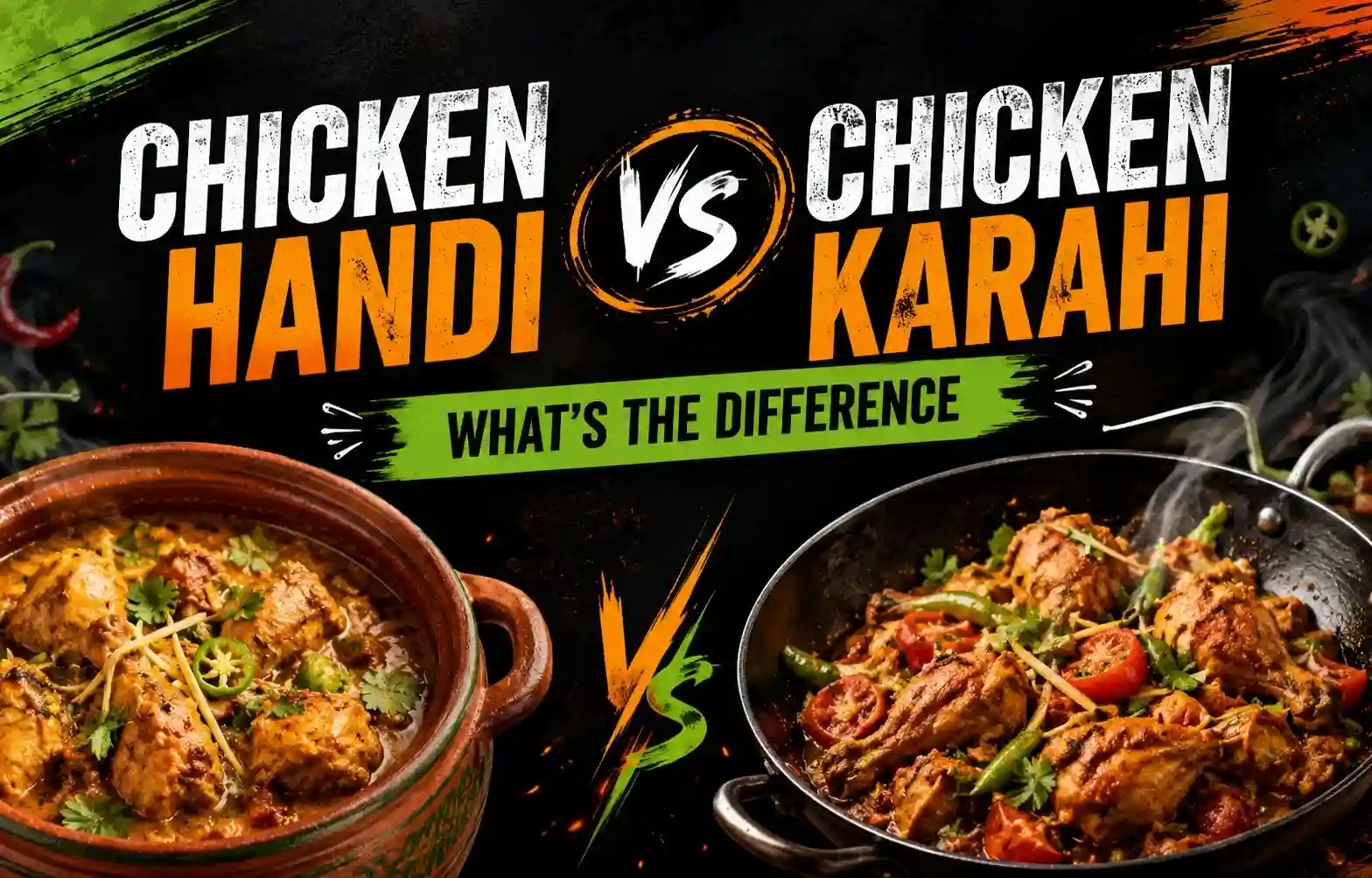
Chicken Karahi is a tomato-based curry cooked fast in a wok-like pan, giving it a bold, tangy, semi-dry masala. Chicken Handi is a creamier curry made with tomatoes, yogurt, or cream, slow-cooked in a rounded pot for a smoother, milder gravy.
In one sentence: Karahi is bold and dry, Handi is smooth and creamy.
Here’s a simple side-by-side to make it even clearer:
Feature | Chicken Karahi | Chicken Handi |
Cooking Vessel | Wok-style karahi pan | Rounded handi pot |
Base | Tomato, ginger, garlic | Tomato + cream or yogurt |
Texture | Thick, semi-dry masala | Smooth, rich gravy |
Flavor | Bold, tangy, spicy | Mild, creamy, rounded |
Cooking Style | Fast, high heat | Slow simmered |
Best Paired With | Naan or roti | Naan or rice |
Now let’s get into the details, because there’s a lot more going on here than just two names for the same curry.
What Is Chicken Karahi?
The word “karahi” doesn’t refer to a spice or an ingredient. It refers to the pan.
A karahi is a round, wok-shaped pan with high sides and a flat bottom. It’s built for one job: high-heat cooking that reduces sauce quickly. The dish takes its name directly from this pan, the same way a dish called “wok chicken” would be named after its cooking vessel.
This style is closely tied to Peshawar-style cooking in Pakistan, where the dish became famous for its simplicity and bold flavor.
How Chicken Karahi Is Made
Traditional Chicken Karahi keeps the ingredient list short and lets the technique do the work:
- Chicken (bone-in is traditional for extra flavor)
- Tomatoes
- Ginger and garlic
- Green chilies
- A handful of whole and ground spices
- Fresh coriander to finish
Here’s the part that surprises a lot of people: authentic Chicken Karahi is made without onions. Instead of building a base with sautéed onions like many other curries, the tomatoes do all the work. This is actually one of the easiest ways to tell if a Karahi is being made the traditional way.
The chicken is seared directly in the hot pan, then simmered with the tomato mixture until the sauce reduces down and clings to the meat. There’s no long, slow process here. Karahi is meant to be cooked fast, over high heat.
What Chicken Karahi Tastes Like
If you like bold, punchy flavors, this is your dish. Expect:
- A tangy kick from the tomatoes
- Warmth from ginger, garlic, and chilies
- A thicker, more concentrated masala rather than a soupy gravy
- A slightly sharp, fresh finish from coriander or green chilies on top
Chicken Karahi doesn’t hide behind cream or heavy spice blends. It’s straightforward, a little fiery, and built for people who want to taste every ingredient.
What Is Chicken Handi?
Where the Name Comes From
“Handi” refers to a different kind of vessel altogether: a deep, rounded pot, traditionally made of clay or metal. Unlike the wide, shallow karahi, a handi is built for slow cooking rather than quick searing.
Historically, clay handi pots were used across South Asian kitchens for dishes that needed time to develop flavor. That slow-cooked tradition is exactly what gives Chicken Handi its signature richness.
How Chicken Handi Is Made
Chicken Handi starts with a similar foundation to Karahi tomatoes, ginger, garlic, and spices but then takes a different turn. Cooks typically add one or more of the following:
- Yogurt
- Fresh cream
- Butter
- A touch of crushed kasuri methi (dried fenugreek leaves)
These additions transform the gravy from sharp and tangy into something smooth, rounded, and rich. Instead of fast-searing, the chicken simmers slowly, allowing the sauce to thicken naturally and the flavors to soften into each other.
The result is a curry that sits somewhere between a traditional Karahi and a Butter Chicken spiced like a classic Pakistani dish, but finished with a creamy, restaurant-style gravy.
What Chicken Handi Tastes Like
Chicken Handi is built for comfort. Expect:
- A smooth, velvety gravy
- Mild tang from tomatoes, softened by cream or yogurt
- A rounded, mellow spice level (though it can still carry heat, depending on the kitchen)
- A slightly rustic, earthy note if crushed fenugreek is used
It’s rich without being overly heavy, and it’s often the dish people order when they want something indulgent but not overwhelming.
Chicken Handi vs Chicken Karahi: The Real Differences
Once you strip away the menu descriptions, the difference really comes down to three things.
1. The Cooking Vessel
This is the most literal difference, and it’s baked right into the names.
- Karahi = cooked in a wok-style pan, built for high heat and fast reduction
- Handi = cooked in a rounded pot, built for slow, even simmering
The pan shape isn’t just tradition, it actually changes how the dish cooks and tastes.
2. The Gravy Base
This is the difference you’ll notice the moment you take a bite.
- Karahi relies on tomatoes, ginger, and garlic alone. No cream, no yogurt. This keeps the masala thick, tangy, and a little sharp.
- Handi builds on that same base but adds dairy cream, yogurt, or butter to soften the sharpness and create a smoother, richer sauce.
3. The Texture and Spice Level
Because of the ingredients above, the final texture and heat level end up quite different:
- Karahi tends to be thicker, drier, and spicier
- Handi tends to be smoother, saucier, and milder
Neither one is “better” ; they’re just built for different cravings.
Which One Should You Order?
If you’re still not sure which dish fits your mood tonight, here’s a simple way to decide:
Choose Chicken Karahi if:
- You love bold, tangy, tomato-forward flavors
- You prefer a thicker curry with less liquid
- You want the closest thing to classic, no-frills Peshawar-style cooking
- You’re a fan of spicier dishes
Choose Chicken Handi if: - You prefer a creamy, smooth gravy
- You want something rich but not overly spicy
- You’re trying Pakistani food for the first time
- You love dishes similar to Butter Chicken, but with a bit more depth
Can’t decide?
Order both and share. Most Pakistani restaurants serve generous portions, and the two dishes actually complement each other well on the same table, one bold, one creamy.
Common Questions About Chicken Handi and Chicken Karahi
Is Chicken Handi spicier than Chicken Karahi?
Usually, no. Chicken Karahi tends to be spicier and tangier because it’s tomato-based with no dairy to soften the heat. Chicken Handi’s cream or yogurt base naturally mellows out the spice level, though heat can vary by kitchen.
Can Chicken Karahi or Chicken Handi be made without dairy?
Chicken Karahi is naturally dairy-free in its traditional form, since it’s built on tomatoes and spices alone. Chicken Handi typically includes cream, yogurt, or butter, so it’s not dairy-free unless a restaurant makes a specific adjustment.
Which dish is more popular in Pakistani restaurants?
Both are staples, but they serve different purposes. Karahi is often treated as the signature, must-try dish, while Handi is a go-to comfort order for families and first-time visitors who want something milder.
Is Chicken Handi the same as Butter Chicken?
They’re related, but not the same. Chicken Handi shares the creamy texture of Butter Chicken but typically carries more spice and a slightly less sweet profile. Butter Chicken tends to be smoother and sweeter overall.
What’s the difference between Karahi and Kadai?
Nothing, really it’s the same word. “Karahi” is more common in Pakistan, while “kadai” or “kadhai” is the more common spelling in North India. Same pan, same cooking style, just regional pronunciation.
Try Both at Charsi Karahi & BBQ
At the end of the day, there’s no wrong answer between Chicken Handi and Chicken Karahi. It really comes down to what you’re in the mood for: bold and tangy, or smooth and creamy.
At Charsi Karahi & BBQ in Mississauga, we make both dishes the traditional way, using fresh, halal ingredients and time-tested recipes. Whether you’re craving our signature Charsi Karahi Gosht or a rich Chicken Makhani Handi, we’ve got you covered for dine-in, takeout, or catering.
- Craving something bold? Order the Charsi Karahi.
- Want something creamy and comforting? Try our Chicken Handi.
- Hosting an event? We cater both dishes for gatherings of any size.
However you decide, one thing’s for sure: you’re not making a wrong choice. You’re just picking your mood for the night. Come taste the difference for yourself fresh, hot, and make the way it’s always been done.