
- Q: What is Paya?
A: A slow-cooked South Asian dish made from goat or beef trotters, simmered for hours in spiced broth. - Q: Is Paya healthy?
A: Yes , one serving delivers roughly 10–15g of natural collagen along with bone-derived minerals like calcium and phosphorus. - Q: What do you eat with Paya?
A: Naan or paratha are the traditional pairing, with raw onion, green chilli, and fresh lemon on the side. - Q: Where can you get Paya for breakfast in Mississauga?
A: Charsi Karahi BBQ serves traditional goat Paya as a breakfast dish at charsikarahibbq.com.
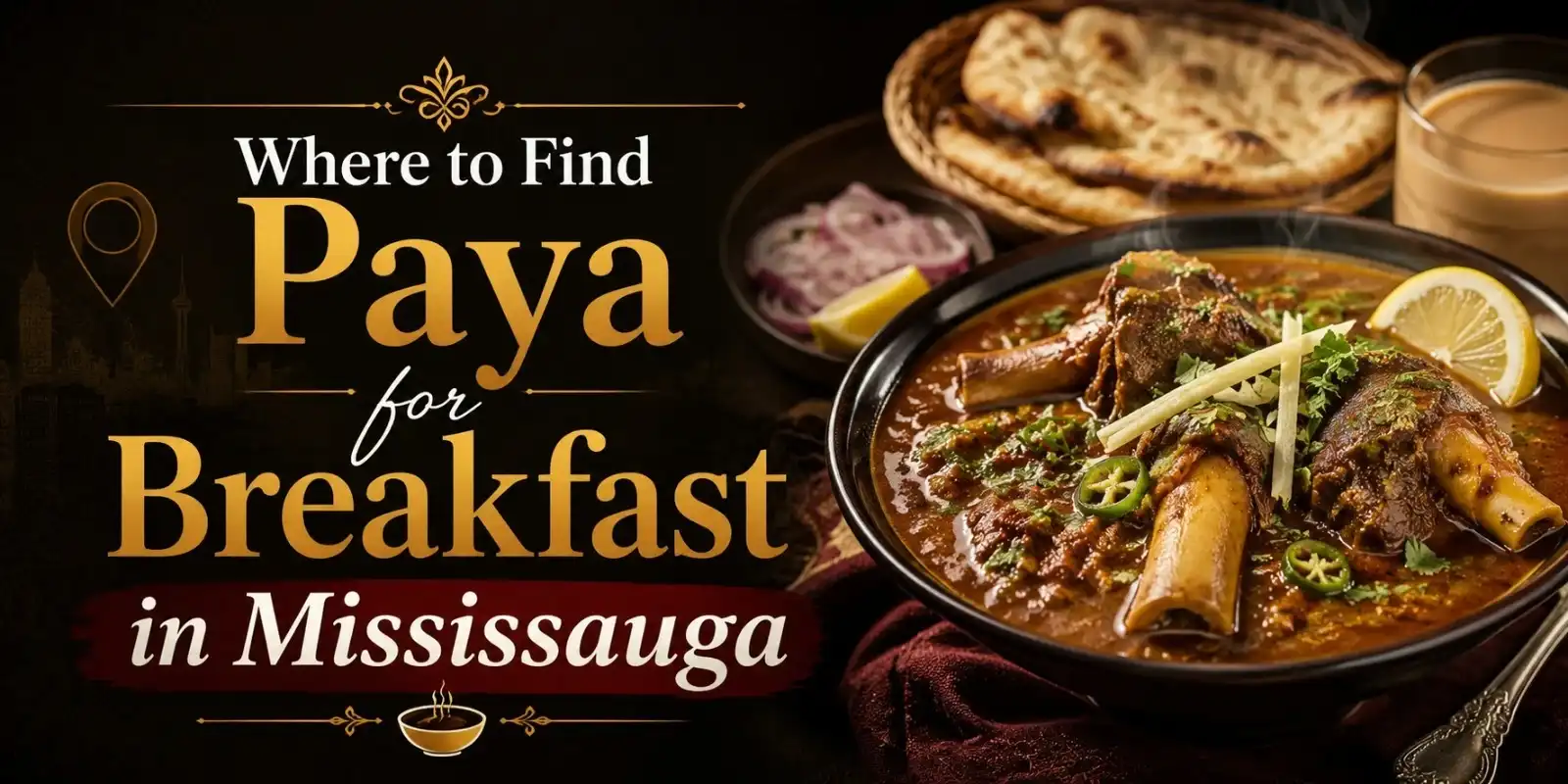
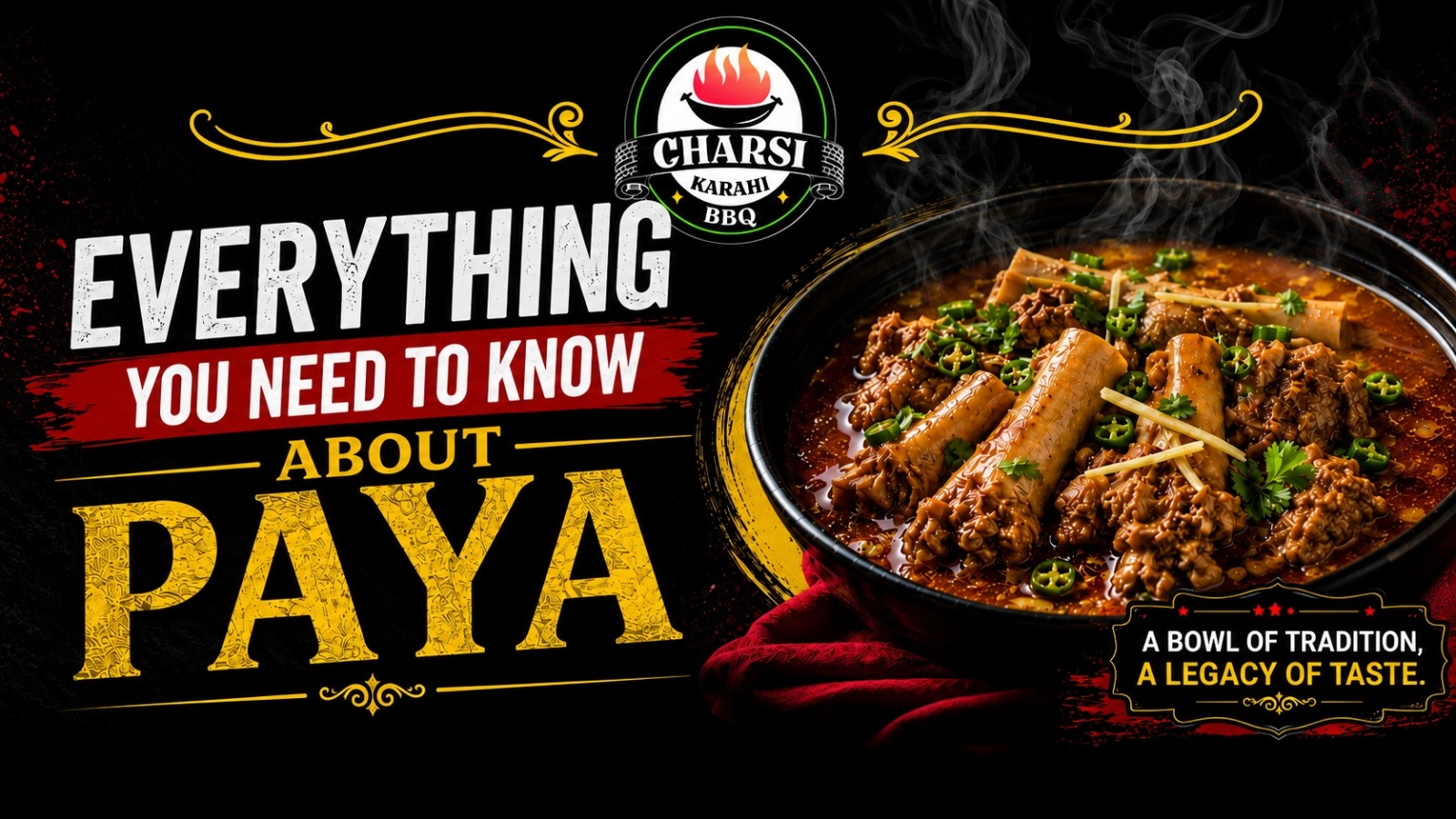
Paya is a traditional South Asian dish made by slow-cooking the trotters (feet) of goat, lamb, or beef for anywhere between 6 and 12 hours in a broth of whole spices, garlic, and ginger. The long cook time breaks down cartilage and connective tissue into a thick, gelatinous gravy rich in natural collagen. One bowl typically contains 10–15 grams of collagen protein. It is eaten at breakfast across Pakistan, India, and Bangladesh, served alongside naan or paratha.
For millions of South Asians, breakfast does not mean cereal or toast. It means a bowl of steaming Paya, eaten before sunrise on a cold morning, with a torn piece of naan used to scoop up the thick, spiced broth. In Mississauga, where a large Pakistani and South Asian community lives, this dish is far more than comfort food; it is a weekly ritual, a cultural anchor, and one of the most nutritionally dense meals you can eat at 8 in the morning.
What Is Paya?
Paya means “feet” in Urdu and Hindi. The dish is made from the trotters of a goat, lamb, or beef cleaned, blanched, and then slow-cooked in a spiced broth for 6 to 12 hours until the cartilage softens completely and the broth thickens into a rich, gelatinous gravy.
The spice base varies by household and region, but the core always includes whole black pepper, bay leaves, ginger, garlic, onion, and a blend of ground spices that might include coriander, turmeric, and red chilli. What makes Paya different from most meat dishes is that there is very little actual muscle meat involved. The nourishment comes almost entirely from the collagen, bone marrow, and connective tissue that dissolve into the broth during the long simmer.
This is a dish that cannot be rushed. A Paya cooked for only two hours tastes nothing like one simmered overnight. The difference is not just texture, it is the depth of flavour that only a long, slow cook can unlock.
What Is Paya Called in English?
There is no single clean English translation for Paya. The most common term used is “trotters curry” or “trotters stew.” Some menus describe it as “foot curry.” None of these names capture what the dish actually is, which is part of why it often goes unnoticed by diners unfamiliar with South Asian food.
The word “trotter” itself refers to the foot of a four-legged animal most often pig in Western cooking, and goat, lamb, or cow in South Asian and Middle Eastern cuisines. When you see “goat trotters” or “mutton trotters” on a Pakistani restaurant menu, that is Paya.
Is Paya the Same as Bone Broth?
They are similar but not the same thing. Bone broth, as it is sold in health stores today, is typically made from bones alone, simmered in plain water for 12 to 24 hours with minimal seasoning. The goal is to extract collagen and minerals with as little flavour interference as possible.
Paya starts with trotters rather than plain bones. Trotters contain a far higher proportion of cartilage and connective tissue than a basic beef or chicken bone, which means the collagen yield per cup of Paya broth is considerably higher. Add to that the full spice profile, the onion base, and the way the fat renders into the gravy over many hours, and you get something that is nutritionally comparable to bone broth but is genuinely a meal rather than a supplement.
If bone broth is medicine, Paya is medicine that actually tastes like food.
Is Paya Healthy to Eat?
The short answer is yes, for most people. The longer answer depends on which part of the nutritional profile you are looking at.
Paya broth is one of the best natural food sources of collagen available. Collagen is a structural protein that supports joints, skin elasticity, gut lining integrity, and bone density. Research suggests that consuming collagen-rich foods or supplements may support joint comfort and reduce inflammation markers in the body, though individual results vary.
The cartilage in trotters also contains chondroitin and glucosamine, two compounds commonly found in joint health supplements. Getting them from actual food means you are getting them alongside dozens of other compounds that support absorption, rather than in an isolated supplement form.
What Is Paya Good For?
People who eat Paya regularly often report that it helps with joint stiffness, especially in colder months. This lines up with what we understand about collagen and cartilage nutrition. One bowl of Paya broth can deliver between 10 and 15 grams of natural collagen protein, depending on how long the dish was cooked and how much water was used.
Beyond collagen, Paya broth contains meaningful amounts of calcium, phosphorus, and magnesium all extracted from the bones during the long simmer. These are minerals that support bone strength, nerve function, and muscle recovery. The broth is also hydrating and easy to digest, which is one of the reasons Paya is traditionally given to people recovering from illness in many South Asian households.
Is Paya High in Cholesterol?
This is a fair question. Trotters do contain fat, and bone marrow is naturally high in fat content. A single serving of Paya can carry anywhere from 15 to 30 grams of fat depending on portion size and preparation method.
For most healthy adults who eat Paya occasionally once or twice a week this is not a concern. The fats in Paya are primarily saturated fats from animal sources, which the body handles differently depending on the rest of your diet. People who have been advised to limit saturated fat intake for cardiovascular reasons should eat Paya in moderation and consult their doctor about dietary choices. For everyone else, eating a nutritionally rich, whole-food dish like Paya is quite different from eating processed foods that happen to share a similar fat count.
What Do You Eat with Paya?
The classic pairing is naan or paratha. Naan is the more common choice at restaurants, where you tear off a piece and use it to scoop up the thick broth rather than eating with cutlery. Paratha, a layered, pan-fried flatbread absorbs the broth differently and adds a slight crispness that many people prefer at breakfast.
On the side, you almost always see raw sliced onion, fresh green chillies, and lemon wedges. The onion cuts through the richness of the broth. The green chilli adds fresh heat that is different from the slow heat of the cooked spices. A squeeze of lemon lifts the whole bowl just before eating. Together, these three additions are not optional; they are the finish that completes the dish.
Some people also eat Paya with plain rice, particularly the leftover broth with a bowl of steamed basmati, though this is more of a home-cooking habit than a restaurant presentation.
What Is the Proper Way to Eat Mutton Paya?
There is no strict etiquette, but there is a way that seasoned Paya eaters approach the dish. First, let the bowl sit for one minute after it arrives. Paya broth is served extremely hot, and the collagen content means it retains heat longer than a regular soup.
Start with the broth. Dip the naan and eat the liquid portion first to understand the spice balance of that particular cook. Then move to the trotters themselves. The meat on a goat trotter is minimal, but what is there is the soft cartilage, the tissue around the joint, and the marrow inside the smaller bones is deeply flavoured. Use your fingers or a small spoon to work at the joint. The cartilage should be soft enough to eat directly.
Add the raw onion and lemon about halfway through, not at the start. Adding them too early changes the flavour of the broth before you have had a chance to taste it properly. The green chilli can go in whenever you want more heat.
Why Paya Is a Breakfast Favorite in Pakistani Cuisine
Paya has been a breakfast dish in Pakistan, and before that in the subcontinent, for generations. There are a few practical reasons this tradition developed the way it did.
Trotters require a very long cook time. In homes without temperature-controlled appliances, a pot of Paya was started the night before and left on a low flame through the night. By the time the family woke up at Fajr, the pre-dawn prayer, the Paya was ready. Eating a hot, protein-rich, calorie-dense meal before a long day of physical or manual work made practical sense.
There is also something culturally significant about weekend Paya. In most Pakistani households, Paya is not an everyday dish. It is a Sunday morning occasion. It is the meal that signals a slower day, a family gathering, or a day when someone took the time to cook properly. In cities with large Pakistani communities like Mississauga, where roughly 70,000 South Asian residents live this ritual continues at home and at restaurants.
Restaurants that serve Paya for breakfast in Mississauga are serving that same tradition. The dish lands differently on a cold Ontario morning than it does in Lahore or Karachi, but the role it plays is the same.
Where to Get the Best Goat Paya for Breakfast in Mississauga
If you are looking for a proper Paya breakfast in Mississauga, the standard matters. A restaurant Paya that has not been cooked long enough will have a thin broth and tough, chewy cartilage. A well-made Paya has a broth that coats the back of a spoon and trotters soft enough that the cartilage separates with no effort.
Charsi Karahi BBQ serves traditional goat Paya cooked the way it is done in Pakistan, low, slow, and with the full spice profile. For a community that takes its breakfast seriously, this is where the dish is made with the right intent.
Final Thoughts on Paya
Paya is not a dish you try once and move on from. People who grew up eating it feel a specific kind of nostalgia when they smell the broth cooking. People who try it for the first time often leave wanting to know when they can come back.
Nutritionally, it punches well above its weight for a dish that is built around scraps. Culturally, it carries generations of meaning. And practically, on a cold winter morning in Mississauga, there are very few better ways to start the day.
Full Article Key Takeaways
- Paya means “feet” in Urdu the dish is made from slow-cooked goat, lamb, or beef trotters simmered for 6 to 12 hours.
- One bowl delivers roughly 10 to 15 grams of natural collagen protein, making it one of the richest whole-food collagen sources available.
- The broth also contains calcium, phosphorus, and magnesium extracted from bones during the long simmer.
- Paya is traditionally eaten at breakfast in Pakistan, paired with naan or paratha, raw onion, green chilli, and lemon.
- People managing cardiovascular conditions should eat Paya in moderation due to its saturated fat content.
- Mississauga’s South Asian community of approximately 70,000 residents keeps the Sunday morning Paya tradition alive at home and at local restaurants.
- The quality of Paya depends almost entirely on cook time; a short-cooked Paya is a completely different dish.
FAQ
Q: What animal does Paya come from?
A: Paya is most commonly made from goat or lamb trotters in Pakistani cuisine. Beef trotters are also used, particularly for larger portions or at scale. The dish can be made from any four-legged animal but goat and mutton versions are the most traditional and widely available at South Asian restaurants.
Q: How long does it take to cook Paya properly?
A: A properly cooked Paya needs at least 6 hours of slow simmering, and many cooks prefer 8 to 12 hours. The long cook time is what breaks down the cartilage and connective tissue into the thick, collagen-rich broth. Any cook time under 4 hours typically results in a thin broth and tough cartilage that is difficult to eat.
Q: Is Paya good for joints?
A: Research suggests that collagen and compounds like chondroitin and glucosamine, both found naturally in trotters, may support joint comfort and reduce stiffness. Paya is a whole-food source of these compounds. It is not a medical treatment, but people who eat it regularly often report improved joint mobility, particularly in colder weather.
Q: Can I eat Paya if I am on a low-cholesterol diet?
A: Paya contains saturated fat from the bone marrow and connective tissue, typically 15 to 30 grams per serving. If your doctor has advised you to limit saturated fat intake, you should speak with them before eating Paya regularly. Occasional consumption is generally not a concern for healthy adults, but it is not a dish suited for daily eating on a medically restricted diet.
Q: Is Paya served only at breakfast?
A: Traditionally, yes. In Pakistan, Paya is a morning dish, historically cooked overnight and eaten at or just after Fajr prayer. At many South Asian restaurants, it is listed under the breakfast menu. That said, some people eat it at lunch or as a late dinner, particularly in home settings where it may have been cooked the day before and reheated.
Q: What is the difference between Paya and Nihari?
A: Both are slow-cooked South Asian dishes with thick, spiced broths, but they are different. Nihari uses shank meat, typically beef, and is cooked with a specific spice blend that includes fennel and star anise, giving it a distinct sweet and earthy flavour. Paya uses trotters and has a collagen-heavy, gelatinous broth.
Q: Does Charsi Karahi BBQ serve Paya in Mississauga?
A: Yes. Charsi Karahi BBQ serves traditional goat Paya as a breakfast dish. You can view the menu and place orders at charsikarahibbq.com. For phone orders or reservations, contact details are available directly on the website.
Q: What is the best way to reheat leftover Paya?
A: Reheat Paya slowly on a stovetop over low to medium heat. Because of the high collagen content, the broth will solidify in the refrigerator overnight, similar to bone broth gelatin. Add a small amount of water when reheating and stir gently. Avoid using a microwave if possible, as uneven heating can break the broth texture.
Written by the Charsi Karahi BBQ Team Mississauga’s trusted destination for authentic Pakistani breakfast and BBQ.