
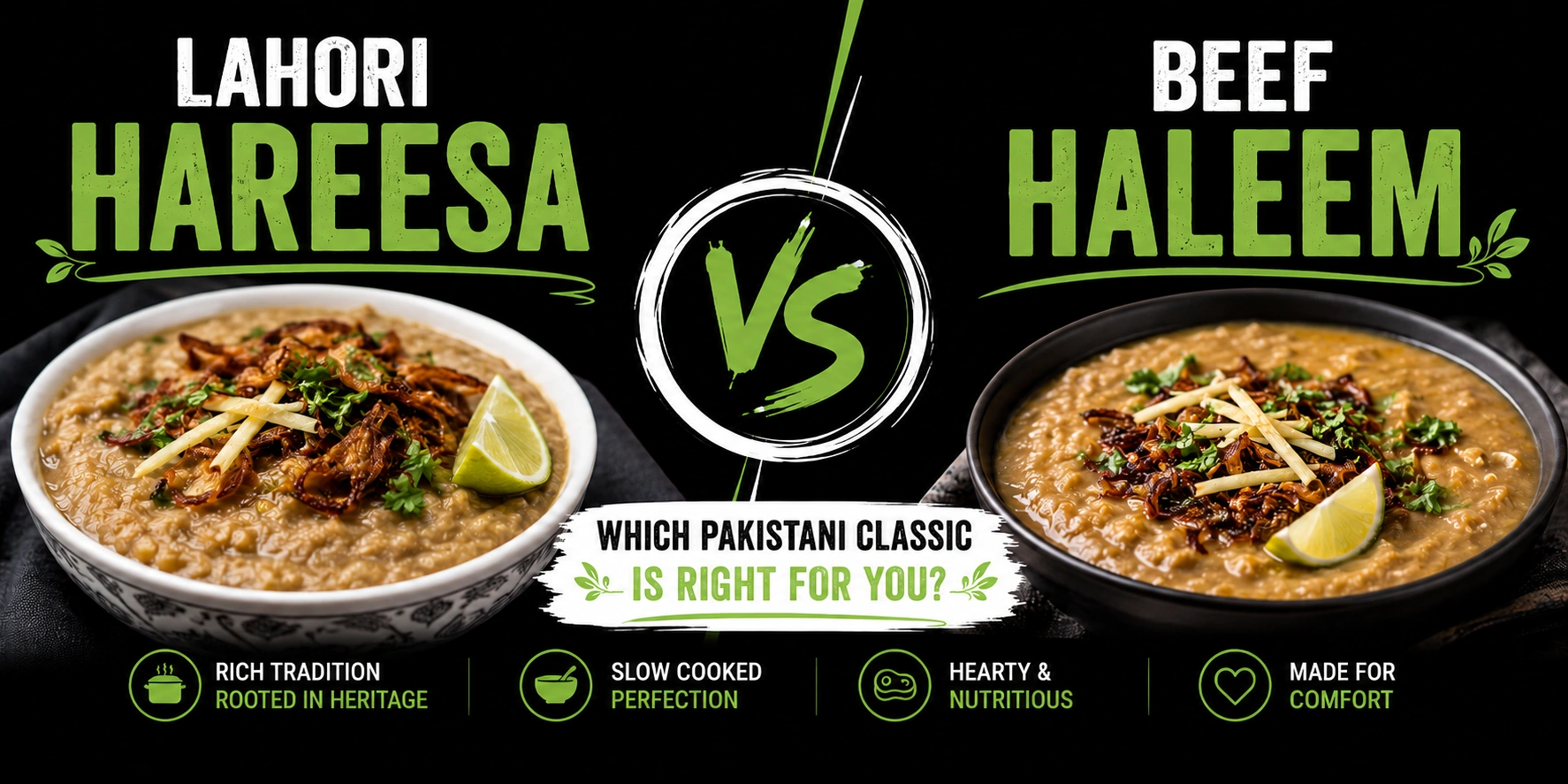
Pakistan’s rich culinary heritage is known for its slow-cooked comfort foods, and Lahori Hareesa and Beef Haleem are two of its most iconic dishes. While both are prepared using traditional cooking methods and wholesome ingredients, they differ in texture, flavor, preparation, and nutritional value. If you’re craving authentic halal Pakistani food in Mississauga, understanding these differences can help you choose the dish that best suits your taste. In this guide, we’ll compare Lahori Hareesa vs. Beef Haleem so you know what to expect before your next meal.
What Is Beef Haleem?
Beef Haleem is a traditional slow-cooked dish made with tender beef, a blend of lentils, barley, and aromatic spices. Its roots can be traced back to the Middle Eastern dish Harees, which was introduced to South Asia during the Mughal era and gradually evolved into the rich, flavorful version enjoyed across Pakistan today.
Beyond its comforting flavor, Beef Haleem is also known for its nutritional value. A typical 200-gram serving provides around 18 to 22 grams of protein from both the beef and lentils, making it a filling and satisfying meal. Packed with wholesome ingredients and slow-cooked to perfection, Beef Haleem remains a popular choice for anyone looking for a nutritious and flavorful traditional dish.
What Is Haleem Made Of?
Haleem is made from beef (or sometimes mutton or chicken), a mixture of lentils including chana dal and masoor dal, broken wheat or barley, onions, ginger, garlic, and a spice blend that typically includes turmeric, red chili, coriander, and garam masala. The dish is finished with fried onions, fresh ginger julienne, green chilies, lemon juice, and chopped coriander. Each topping adds a contrasting flavor or texture that balances the richness of the base.
What Kind of Meat Is in Haleem?
Beef is the most common protein used in Pakistani haleem, particularly shank or brisket cuts that break down well during long cooking. Some regional versions use mutton for a stronger flavor, and chicken haleem has grown popular as a lighter alternative. At Charsi Karahi BBQ, the beef haleem is prepared with bone-in cuts that add collagen and depth to the broth during the slow-cooking process.
What Is Haleem Called in English?
Haleem does not have a direct English translation because no Western dish shares its exact preparation method. It is most accurately described as a slow-cooked meat and lentil porridge. Some food writers call it a South Asian meat stew, but that phrase misses the grain component. In official food labeling and restaurant menus outside Pakistan, haleem is simply called haleem, and the name has been internationally recognized without substitution.
What Is Hareesa?
Lahori Hareesa is a traditional slow-cooked Pakistani dish made primarily with cracked wheat and tender beef. Unlike Haleem, it uses fewer ingredients, allowing the natural flavors of the wheat, meat, and spices to shine. The dish has deep historical roots and is believed to have originated from the Middle Eastern dish Harees, later becoming a beloved winter specialty in Pakistan, especially in Lahore. Today, it remains a popular choice on the dine in menu at authentic Pakistani restaurants, where guests can enjoy its rich, homemade flavor.
Making authentic Lahori Hareesa is a time-intensive process. The cracked wheat is soaked overnight before being slow-cooked with beef for six to eight hours. During the final stage, the mixture is stirred continuously to create its signature smooth, thick, and velvety texture. A generous topping of desi ghee is then added, enhancing its rich flavor and aroma.
Known for its comforting taste and wholesome ingredients, Lahori Hareesa is a popular choice for breakfast, family gatherings, and festive occasions. Its slow-cooked preparation and unique texture make it one of the most cherished traditional dishes in Pakistani cuisine.
What Is the Meaning of Hareesa?
The word hareesa comes from the Arabic root haras, meaning to pound or crush. The name describes the preparation method directly. In traditional cooking, the wheat and meat were pounded together in a stone mortar after boiling. Modern kitchens use wooden paddles or hand blenders to achieve the same smooth consistency, but the name preserved its original meaning across centuries and geographies.
What Do Hareesa Taste Like?
Hareesa tastes mild, creamy, and deeply savory. The wheat base creates a neutral backdrop that lets the natural flavor of the beef come forward without competing spices. The ghee topping adds richness and a slightly nutty aroma. Some cooks add a pinch of cinnamon or cardamom for warmth, but the dish never builds toward heat the way haleem does. First-time eaters often describe the flavor as similar to a meat-flavored porridge with a silkier texture than oatmeal.
What Is the Difference Between Haleem and Hareesa?
The core difference between haleem and hareesa is ingredient complexity. Hareesa uses two main components and almost no spices. Haleem uses five to eight base ingredients and a multi-step spice process that adds layers of flavor throughout cooking. That single difference creates a cascade of contrasts across texture, color, taste, and nutritional content.
| Feature | Beef Haleem | lahori Hareesa |
| Main ingredients | Beef, lentils, barley, spices | Beef, cracked wheat |
| Texture | Thick, slightly chunky | Smooth, paste-like |
| Spice level | Medium to high | Mild |
| Color | Deep brown with red tones | Light beige to cream |
| Cooking time | 4 to 6 hours | 6 to 8 hours |
| Protein per 200g | 18 to 22 grams | 14 to 17 grams |
| Common garnish | Fried onions, lemon, ginger | Ghee, sometimes cinnamon |
| Best served with | Naan, roti, paratha | Naan, kulcha |
| Traditional occasion | Year-round, Muharram | Winter, Eid ul-Adha |
Haleem suits people who want bold flavor, a complex spice experience, and higher protein from multiple sources. Hareesa suits people who prefer mild comfort food, a smoother texture, or a dish that is easier on the stomach.
At Charsi Karahi BBQ, both dishes are prepared using traditional methods without shortcuts. The haleem follows a slow-stirring process that cannot be replicated in a pressure cooker, and the hareesa is finished with hand-clarified ghee for the authentic finish that distinguishes restaurant-quality preparation from home shortcuts.
Which One Is Healthier?
Both dishes are whole-food preparations with no artificial additives, which places them ahead of many processed food options in terms of nutritional quality. The healthier choice between them depends on your specific health goals rather than a blanket recommendation.
Is Beef Haleem a Healthy Choice?
Beef Haleem is a wholesome, protein-rich dish made with beef, lentils, barley, and traditional spices. The combination of beef and lentils provides a complete source of protein, while the lentils add dietary fiber that supports healthy digestion and helps you feel fuller for longer. This balance of protein and fiber makes Beef Haleem a satisfying meal for people looking for both flavor and nourishment.
The blend of spices commonly used in Beef Haleem, including turmeric and ginger, also contributes natural antioxidants and anti-inflammatory properties. While these ingredients are part of a healthy diet, they are best enjoyed as part of a balanced lifestyle rather than as a medical treatment.
Is Hareesa Healthy?
Hareesa is lower in fiber than haleem because it contains no lentils. It is also lower in total calories per 200-gram serving, making it a lighter option for people watching caloric intake. The wheat base provides slow-digesting complex carbohydrates that sustain energy over several hours. The ghee topping adds saturated fat, which is the primary nutritional consideration for people with cardiovascular concerns.
Hareesa is particularly suitable for people recovering from illness, for young children being introduced to meat-based foods, and for anyone with a sensitive digestive system. The simple ingredient list means fewer potential irritants compared to the spiced profile of haleem.
What Do You Eat Haleem and Hareesa With?
Both Beef Haleem and Lahori Hareesa are traditionally enjoyed with fresh flatbreads. Beef Haleem pairs perfectly with tandoori naan or flaky paratha, while Lahori Hareesa is commonly served with plain naan or kulcha to complement its smooth texture.
To enhance the flavors, these dishes are often accompanied by fresh lemon wedges, sliced onions, and green chutney. Some restaurants also serve Haleem with tamarind chutney, adding a sweet and tangy finish that balances its rich, savory taste.
FAQS
What is the difference between Haleem and Hareesa?
Beef Haleem is made with beef, lentils, barley, and spices, creating a thick, flavorful stew. Lahori Hareesa is prepared with cracked wheat and beef, giving it a smoother texture and milder taste. Haleem is spicier, while Hareesa highlights the natural flavor of the meat and wheat.
Is Haleem the same as Hareesa?
No. Hareesa is a traditional Middle Eastern dish made with wheat and meat. Haleem is its South Asian variation that includes lentils, barley, and a richer blend of spices, creating a thicker and more flavorful dish.
How long does it take to cook Beef Haleem?
Traditional Beef Haleem takes about 4 to 6 hours to cook over low heat. Slow cooking allows the beef, lentils, and barley to blend into a rich, creamy texture with deep flavor.
Is Beef Haleem healthy?
Yes. Beef Haleem is high in protein and fiber because it combines beef, lentils, and barley. It can be part of a balanced diet, but restaurant versions may contain more sodium, so portion size and accompaniments should be considered.
What does Lahori Hareesa taste like?
Lahori Hareesa has a smooth, creamy texture with a rich, savory flavor from slow-cooked beef and cracked wheat. It is milder than Haleem and is traditionally finished with desi ghee for added richness.
Which dish is more popular at Pakistani weddings?
Beef Haleem is more commonly served at Pakistani weddings because it is easy to prepare in large quantities and appeals to a wide range of guests. Lahori Hareesa is more often enjoyed at family gatherings and traditional breakfasts.
Is Hareesa the same as Harissa?
No. Hareesa is a slow-cooked dish made with beef and cracked wheat, while Hareessa is a North African chili paste made from peppers, garlic, and spices. Despite the similar names, they are completely different foods.
Where can I try authentic Beef Haleem and Lahori Hareesa in Mississauga?
If you’re looking for authentic halal Pakistani food in Mississauga, Charsi Karahi BBQ serves both Beef Haleem and Lahori Hareesa, prepared using traditional recipes and slow-cooking methods.