
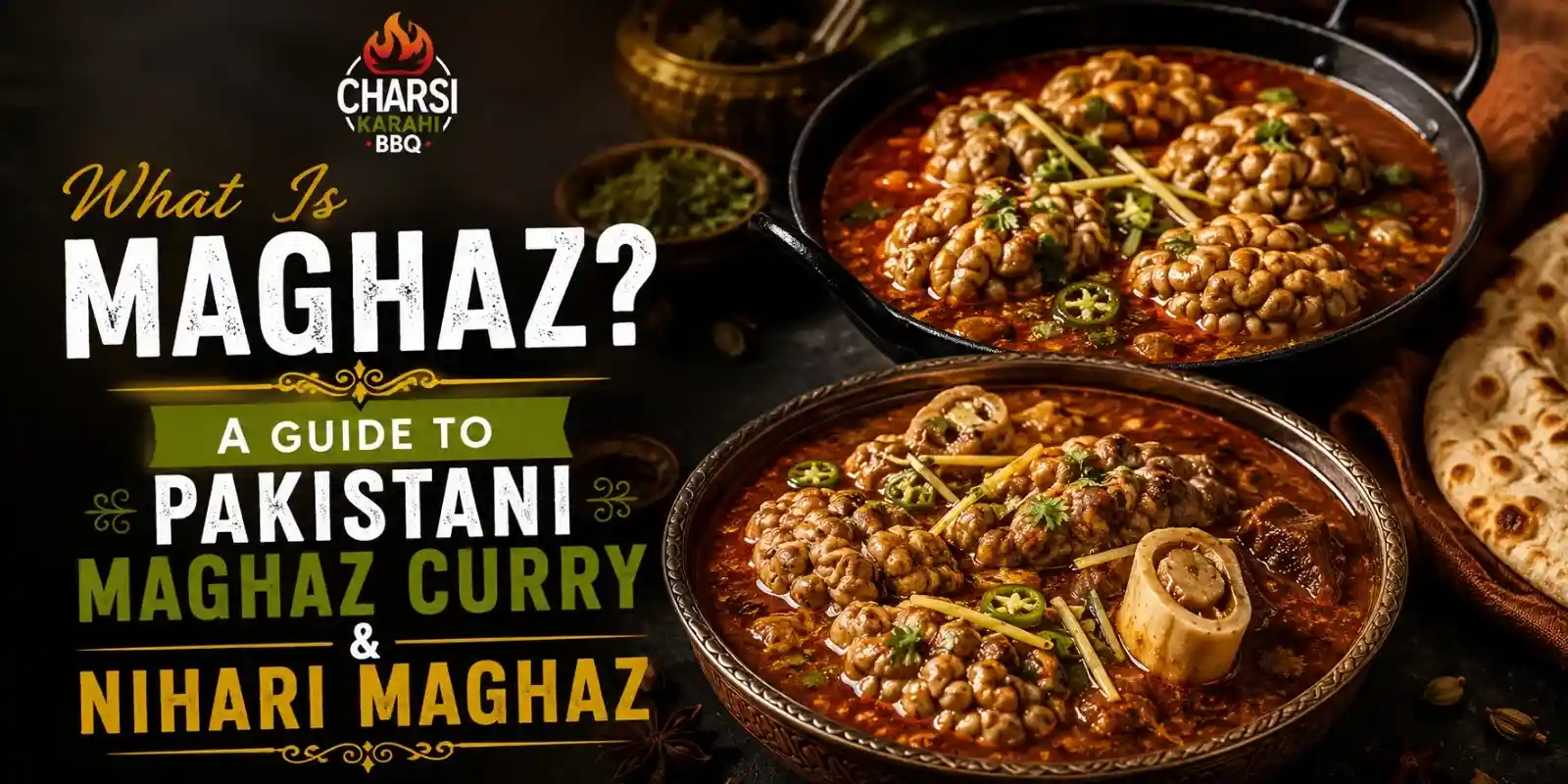
You’ve probably seen “maghaz” on a Pakistani menu and paused for a second. Maybe a friend ordered it and you weren’t sure what it was. Maybe you scrolled past a photo of “nihari maghaz” online and got curious.
Here’s the short answer: maghaz means brain in Urdu, and it’s one of the most beloved delicacies in Pakistani cuisine. It’s rich, spiced, and a lot more approachable than it sounds.
In this guide, we’ll cover what maghaz actually is, how maghaz curry is cooked, what makes nihari maghaz different, whether it’s healthy, and where you can try it fresh in Mississauga. By the end, you’ll know exactly what to expect the next time you see it on a menu.
What Is Maghaz?
Maghaz is the Urdu word for brain. In Pakistani cooking, it refers to a dish made from goat, lamb, or cow brain, slow-simmered in a spiced curry until it’s tender and full of flavor.
It’s part of a bigger food tradition across South Asia that uses every part of the animal, not just the cuts we’re used to seeing at a grocery store. If you want to explore more about Pakistani cuisine in Mississauga, there are plenty of traditional dishes worth discovering. Maghaz sits in the same family as other offal dishes like:
- Kaleji (liver)
- Paya (trotters)
- Nalli (bone marrow)
These dishes aren’t leftovers or afterthoughts. They’re considered some of the most flavorful, most requested items on a traditional Pakistani menu.
Maghaz vs. Bheja Fry Are They the Same Thing?
Yes and no. Both use the same main ingredient: brain. The difference comes down to region and style.
- Maghaz is the term used in Pakistan and much of North India.
- Bheja fry is the name you’ll hear in Hyderabad and Mumbai, especially as a street food.
The flavor profiles shift too. Maghaz in Pakistan tends to lean into tomatoes, green chilies, and a bold, straightforward spice mix. Bheja fry, especially in Hyderabad, sometimes gets curry leaves or a slightly different masala blend. Same idea, different accent.
What Does Maghaz Taste and Feel Like?
If you’ve never had it, the texture is probably what throws people off before the flavor does. Maghaz is soft, creamy, and almost custard-like once it’s cooked. Some people compare it to scrambled eggs. Others say it’s closer to a soft pâté.
Here’s what actually stands out when you eat it:
- Texture first: It’s delicate, not chewy or tough like other meats.
- Flavor is about the masala, not the brain itself: On its own, the brain has a very mild taste. The spice blend ginger, garlic, cumin, coriander, chili is what gives the dish its personality.
- It melts in your mouth: Done right, maghaz almost dissolves as you eat it, soaking up every bit of the curry around it.
A lot of first-time eaters go in nervous and walk away surprised. It’s one of those dishes that tastes nothing like it sounds.
How Is Maghaz Curry Made?
Making maghaz curry well takes patience. The brain is delicate, and overcooking or rough handling turns it mushy fast. Good cooks treat it gently, almost like they’re handling an egg.
Here’s the general process, step by step:
- Cleaning and deveining —> The brain is carefully washed and any visible veins or membranes are removed.
- Parboiling —> It’s briefly boiled in salted water. This firms it up and helps remove excess fat before it hits the pan.
- Building the masala base —> Onions are sautéed until golden, then ginger-garlic paste, tomatoes, and chilies are added and cooked down until the oil separates from the spices. This is the flavor foundation of the whole dish.
- Folding in the brain —> The parboiled brain goes in last and is gently mixed into the masala, usually by shaking the pan rather than stirring hard, so the pieces stay intact.
- Finishing touches —> A sprinkle of garam masala, fresh coriander, and green chilies at the end brightens everything up and adds one final layer of heat.
Regional Spice Variations
Not every maghaz curry tastes the same, even within Pakistan. A few common differences:
- Karachi-style tends to be spicier and more tomato-forward.
- Lahore-style often leans into a deeper, more layered masala with a longer simmer.
- Hyderabadi bheja fry sometimes adds curry leaves or coconut for a completely different flavor direction.
None of these are “more correct” than the others; it really comes down to regional tradition and personal taste.
What Is Nihari? A Quick Primer Before Nihari Maghaz
Before we get into nihari maghaz, it helps to understand nihari on its own.
Nihari is a slow-cooked beef or mutton stew, traditionally eaten for breakfast. The name comes from the Arabic word “nahar,” meaning morning or daytime, a nod to its roots as an early meal for Mughal nobility who needed something hearty before a long day.
What makes nihari special is the cooking time. Meat is simmered for hours, sometimes overnight, until it’s falling-apart tender and the gravy turns thick and deeply spiced.
This matters here because nihari is essentially the “base” dish and maghaz is one of its most popular add-ons.
What Is Nihari Maghaz?
Nihari maghaz is classic nihari topped with, or simmered together with, cooked brain. The brain adds a silky, rich texture on top of the already thick, spiced gravy nihari is known for.
Here’s how it’s typically served:
- The nihari is prepared the traditional way of slow-cooked meat in a deep, spiced gravy.
- Cooked brain pieces are folded in or placed on top just before serving.
- The dish is finished with tarka (tempered oil poured over the top), fresh ginger, sliced green chilies, and chopped coriander.
This isn’t a beginner order. Nihari maghaz is usually requested specifically by name, by people who already love nihari and want the extra richness the brain brings. If you see someone order it by name without hesitation, you’re probably sitting next to a serious nihari fan.
Nalli Nihari vs. Maghaz Nihari What’s the Difference?
Nihari comes with a few popular variations, and it’s easy to mix them up if you’re new to the dish. Here’s a quick breakdown:
Variation | What’s Added | Texture & Flavor |
Nalli Nihari | Bone marrow | Rich, buttery, deep flavor |
Maghaz Nihari | Brain | Soft, creamy, delicate |
Plain Nihari | Just meat and gravy | Classic, spiced, hearty |
Some restaurants even serve nihari with both nalli and maghaz together, for people who want the full experience in one bowl. If you’re ordering for the first time, plain nihari is the safest starting point. You can always work your way up to maghaz nihari once you know you love the base dish.
Is Maghaz Healthy? Nutrition Facts You Should Know
Maghaz has a surprisingly interesting nutritional profile. Like most things worth eating, it comes with both upsides and things to be mindful of.
The benefits:
- Protein —> The brain is a solid protein source, helping your body build and repair muscle.
- Omega-3 fatty acids —> These support brain function and heart health, and they’re one of the reasons maghaz gets more nutritional credit than people expect.
- B vitamins —> Important for energy production and a healthy nervous system.
The trade-off:
- Cholesterol Maghaz is high in cholesterol. That doesn’t mean it’s off-limits, but it does mean moderation matters, especially if you’re managing a heart condition or watching your cholesterol intake.
The best approach is treating maghaz the way you’d treat any rich, indulgent dish: enjoy it, but balance it out. Pairing it with rice, a light salad, or roasted vegetables helps round out the meal instead of making it feel heavy from start to finish.
If you have specific dietary restrictions or health concerns, it’s always worth checking with a doctor or nutritionist before making rich dishes like this a regular habit.
Why Pakistanis Love Maghaz and Nihari Maghaz
Food like this isn’t just about taste. It’s tied to memory, family, and tradition.
Maghaz and nihari maghaz show up most often around Pakistani breakfast and:
- Family gatherings, where a big pot of nihari is the centerpiece of the table
- Eid-ul-Adha, when nose-to-tail cooking is part of honoring the sacrifice
- Weekend breakfasts, a tradition that goes back generations in cities like Lahore and Karachi. Charsi Karahi BBQ also highlights traditional breakfast dishes on its dine-in menu.
There’s also a bigger cultural value at play here: not wasting any part of the animal. That mindset runs deep in South Asian cooking, and dishes like maghaz are proof that “off-cuts” can be some of the most celebrated food on the table.
For Pakistani communities living outside Pakistan including right here in Mississauga dishes like maghaz and nihari maghaz do something else too. They’re a direct link back home. A single bite can bring back a specific kitchen, a specific relative, a specific Sunday morning.
Common Questions About Maghaz and Nihari Maghaz
What does “maghaz” mean in Urdu?
Maghaz simply means “brain.” In Pakistani cuisine, it refers to a curry dish made from cooked animal brains.
Is maghaz made from cow, goat, or lamb brain?
It can be any of the three, depending on availability and regional preference. Goat and lamb are the most common choices, though cow brains are also used.
What’s the difference between maghaz curry and nihari maghaz?
Maghaz curry is its own standalone dish, cooked in a tomato-and-spice masala. Nihari maghaz is added to a slow-cooked nihari stew, combining two dishes into one.
Does maghaz taste like organ meat? Not in the way most people expect. It has a mild flavor on its own and takes on whatever spices it’s cooked with, so the “organ meat” taste people worry about isn’t really present.
Is maghaz safe and healthy to eat regularly?
It’s safe to eat when properly cleaned and cooked, and it does offer real nutritional benefits like protein and omega-3s. Because it’s high in cholesterol, it’s best enjoyed occasionally rather than as an everyday dish.
Where can I try authentic maghaz and nihari maghaz in Mississauga?
Charsi Karahi & BBQ prepares both dishes fresh, using traditional methods and 100% halal ingredients, right here in Mississauga.
Whether you’re a longtime nihari fan looking for your next favorite order, or you’re trying maghaz for the very first time, our kitchen treats both with the same care and attention that generations of Pakistani cooks have put into them.
You can enjoy it a few different ways:
- Dine in and experience it fresh out of the kitchen
- Order takeout for a comforting meal at home
- Ask about catering if you’re planning a family gathering or event where nihari and maghaz belong on the table.